Medjool Dates Supplier: What a Good One Should Tell You
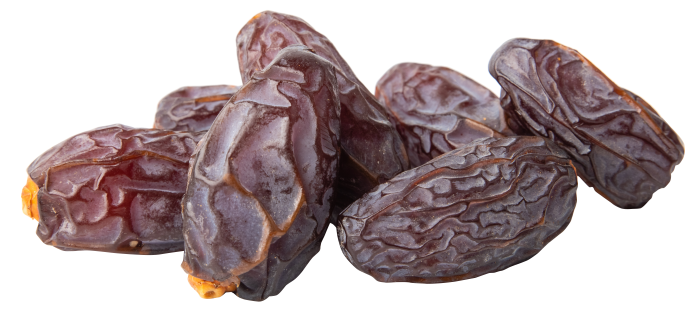
A Medjool dates supplier is worth judging on more than its price per kilo. Medjool is a big, very soft date with a rich caramel taste, and it is also easy to damage. The fruit’s skin, its size grade, how cold it was kept and whether the pack you liked last month is still in stock all decide whether the price was fair. This guide goes through what a good supplier should be able to tell you on each point, using the FAO date palm handbook for the technical side and one Malaysian wholesaler’s Medjool list, checked in November 2026, for real numbers.
Where the fruit comes from
Medjool originated in Morocco. FAO’s handbook goes further: every Medjool palm in the world traces back to one palm in Bou Denib, Morocco. The crop has spread well beyond Morocco since. When the handbook was written, most Medjool came from the Coachella Valley and Bard in California and from Israel, with small amounts from Mexico and South Africa, and production was put at under 5,000 tons a year.
Malaysia grows no dates commercially, so every Medjool here is imported. On the list we checked, all nine Medjool listings were named as Palestine stock. A Medjool dates supplier with more than one origin should say which origin each pack is, and the pack itself should carry it. FAO notes that in most importing countries the law requires the package to show the weight, country of origin, quality and expiry date. If a box reaches you with none of those, ask why.
Our earlier piece on reading a date importer’s own website shows how to check whether a seller names the growing region for each variety, which is a quick test before you even ask for a price.
Size grades: Jumbo, Large and everything in between
Size matters a great deal with Medjool. FAO describes packinghouses sorting in two stages. First the fruit is split into Grade A (perfect fruit), Grade B (fruit with skin separation), Grade C (fruit for pitting and industrial use) and Grade D (rotten and damaged). Then the Grade A fruit is sorted again by size into jumbo, large and medium, which FAO says matters most for large-fruited varieties such as Medjool.
Israel defines its Medjool sizes by the weight of each fruit:
| Israeli Medjool size | Weight per fruit |
|---|---|
| Jumbo | more than 23 g |
| Large | 18 g to 23 g |
| Medium | 15 g to 18 g |
That table is one country’s definition. FAO says other countries, the USA for instance, use different ones, and in Malaysia the A, AA, AAA and Jumbo labels are each importer’s own size sorting. So a “Jumbo” from one supplier and a “Jumbo” from another are not promised to be the same fruit. A useful question for any supplier is what its own grade names mean. Ask for a weight per fruit or a count, and if it can’t give either, compare the fruit side by side before ordering in bulk.
Loose skin and sugar spots
FAO lists two defects typical of Medjool, neither caused by disease. The first is loose skin. As the flesh loses water, on the palm and after picking, the skin tends to pull away from it. FAO calls this an aesthetic defect rather than a taste defect, and fruit with more than 20 to 25% loose skin is graded Class II. The second is sugar crystals forming on the flesh and under loose skin, mostly where the skin has broken, and that too puts the fruit in Class II.
Skin separation hits the price. The handbook says skin separation is more serious in varieties such as Medjool and significantly lowers the price of export fruit. It also calls Medjool a soft, delicate fruit with a thin skin that has to be handled with care, and says harming the skin can cause sugar crystallisation. So a Medjool lot with a lot of loose or crystallised skin can taste fine and still be Class II fruit. A supplier who knows the product will say so up front rather than let you find out when the box is opened.

Cold and frozen storage
FAO says the temperature commonly used to keep dates of several varieties, Medjool included, for the long term is −18°C. It also warns that some packing materials cannot withstand −18°C, so the packaging has to be chosen with storage in mind. Packing has a second job, keeping moist fruit from drying out further.
Moisture has to be right, too. FAO describes fruit packed too moist, naming “Juicy Medjool” as one case, going through yeast fermentation and then souring. A supplier doesn’t need to quote lab numbers at you, but it should be able to say how its Medjool was stored before it reached you and how it is kept now. That one question tells you a lot about whether the soft texture you paid for will last. For the wider list of things to compare between wholesalers, see choosing a kurma wholesaler.
Consistent supply: what a Medjool dates supplier’s stock list shows
Steady supply is easy to promise and harder to show. A stock list shows it better than any sales line. Here is every Medjool listing on the list we checked in November 2026, with the price per kilo worked out from the pack price and weight.
| Listing | Pack | Price | Per kg | Stock |
|---|---|---|---|---|
| Premium Jumbo | 5kg | RM280 | RM56.00 | In stock |
| Super Jumbo | 5kg | RM315 | RM63.00 | In stock |
| Jumbo | 12 × 500g | RM355 | RM59.17 | In stock |
| Jumbo | 8 × 900g | RM448 | RM62.22 | In stock |
| Jumbo | 900g box | RM70 | RM77.78 | In stock |
| Jumbo (second listing) | 12 × 500g | RM290 | RM48.33 | Out of stock |
| Large | 5kg | RM250 | RM50.00 | Out of stock |
| Large | 8 × 1kg | RM394 | RM49.25 | Out of stock |
| Large | 24 × 250g | RM355 | RM59.17 | Out of stock |
Five of the nine were in stock. Every Large listing was out, so a buyer who wanted Large that day had to pick another grade or wait. The three cheapest packs per kilo were all out of stock as well, which means the cheapest Medjool you could actually buy was the Premium Jumbo 5kg at RM56 a kilo. Smaller packs did not always cost more per kilo either: the 12 × 500g set at RM59.17 was below the 8 × 900g set at RM62.22, and the 5kg Super Jumbo at RM63 was above both.
For a reseller this matters more than the headline price. Ask a supplier which grades it has actually had in stock over the past few months, not only today, and which pack sizes it can repeat. If you are new to how Medjool prices are built up, our post on Medjool pricing factors in the international market is a useful companion to this one.
Timing an order
Demand for dates in Malaysia peaks before and during Ramadan, and Hari Raya, weddings (hantaran), kenduri and umrah gifts are other peaks. With a whole Medjool grade out of stock on the list we checked, ask early if you need a specific grade or pack for any of those dates.
Questions buyers ask about Medjool suppliers
Is Medjool Jumbo the same size from every supplier?
No. Grade names are each importer’s own sorting. Israel defines Medjool Jumbo as more than 23 g per fruit, but FAO notes other countries use other definitions, so ask each supplier what its Jumbo means.
Are loose-skinned Medjool dates bad?
Not in taste. FAO treats loose skin as an aesthetic defect, though fruit with more than 20 to 25% loose skin is graded Class II, so it should be priced as a lower class.
Should Medjool be kept frozen?
FAO gives −18°C as the temperature commonly used for long-term preservation of several varieties including Medjool. For short periods at home, follow what the supplier and the pack say.
A good Medjool dates supplier can answer every question above without hesitating: where the fruit is from, what its grades mean, how it was stored and what is really in stock. More about this site is on the About Us page and the contact page.